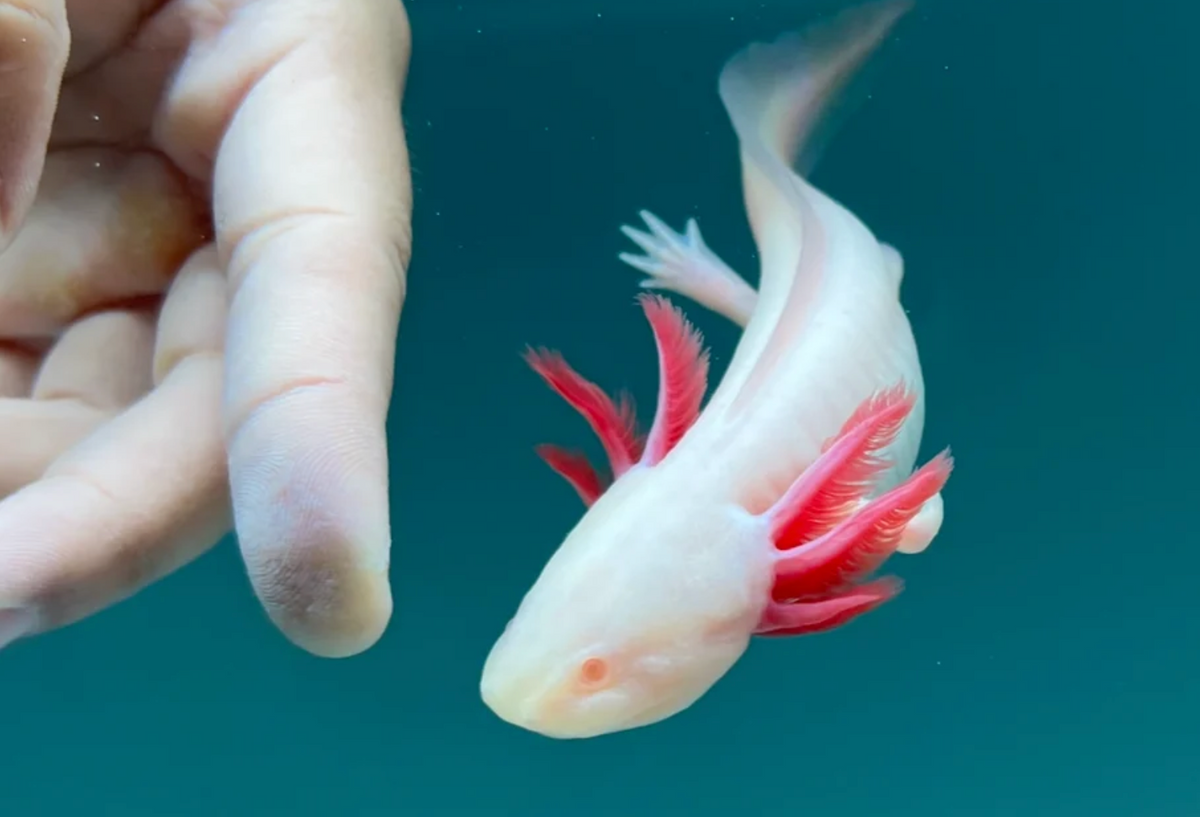
Here's the twist: axolotls already are salamanders. What people mean by "turning into a salamander" is metamorphosis, when an axolotl leaves its aquatic, gilled form and becomes a land-dwelling adult, much like its cousin the tiger salamander. It's triggered by a surge of thyroid hormone. When it happens, the axolotl loses its feathery gills, grows eyelids, and starts breathing air on land. It's rare, though. Most axolotls spend their whole lives as aquatic "babies" and never transform at all.
So what makes a few of them change, and what does it mean for a pet axolotl? Watch the video below to see a transformed axolotl, then read on for the full story.
Why Most Axolotls Never Change
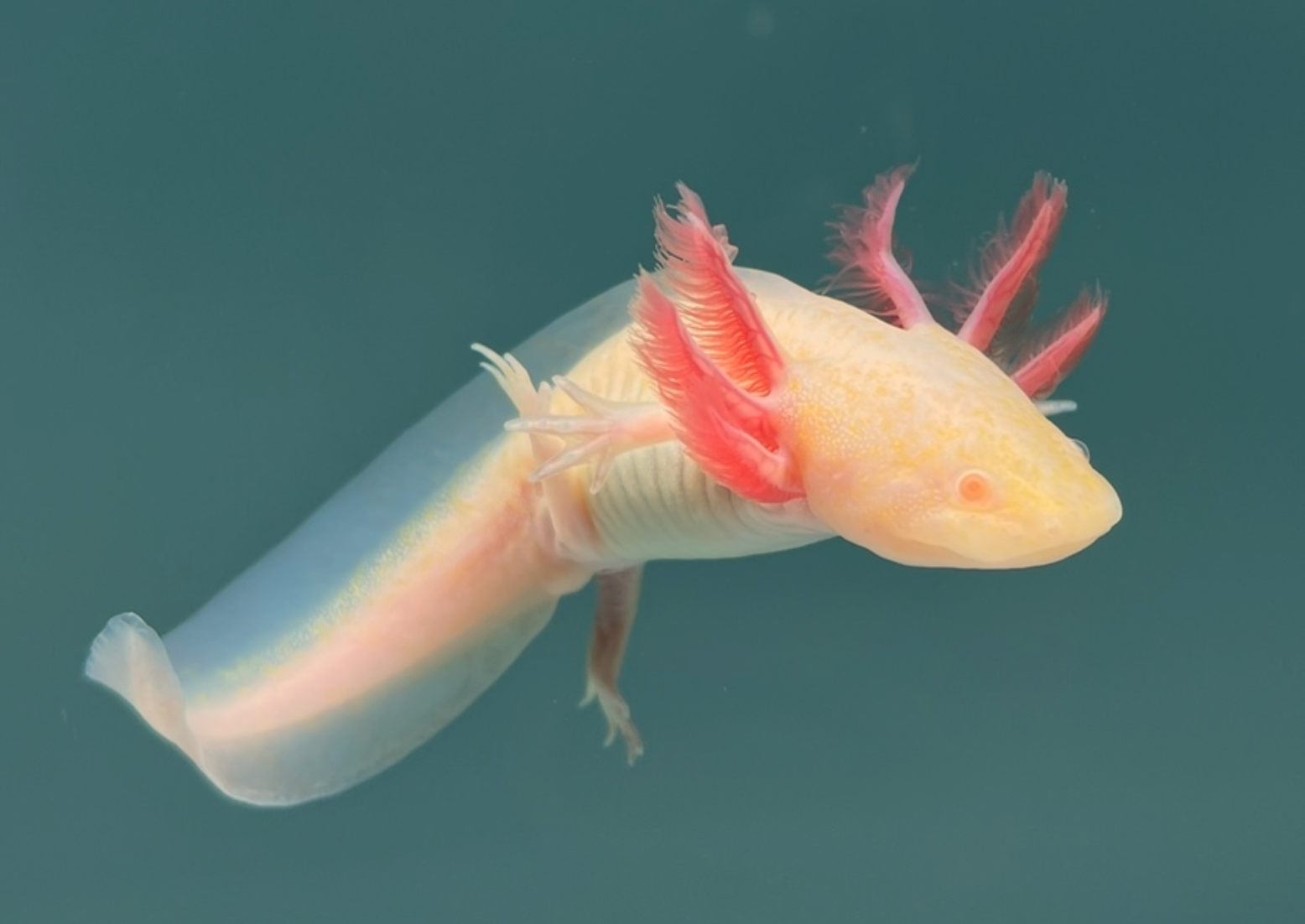
Axolotls are a type of mole salamander and close cousins of the tiger salamander. Their relatives hatch as gilled larvae, then transform into land-dwelling adults. Axolotls normally skip that final step. This is called neoteny: they reach adulthood and breed while keeping their juvenile, fully aquatic body.
Scientists link this to the thyroid. Axolotls produce very little of the thyroid hormone that drives metamorphosis in other amphibians. In their native lakes near Mexico City, staying aquatic made sense. The water was cool, stable, and full of food, so there was no reason to leave it.
What Triggers Axolotl Metamorphosis?
The main trigger is a rise in thyroid hormone, also called thyroxine. Iodine is a building block of this hormone, so exposure to extra iodine can play a role. In labs, researchers can force an axolotl to morph by giving it thyroid hormone directly.
Genetics matter too. Some pet axolotls carry tiger salamander genes from crossbreeding decades ago, which can make them more likely to transform on their own. Stressful conditions, like poor water quality or very shallow water, are also often blamed, though the evidence there is less clear.
What Changes During Metamorphosis
Once it starts, the transformation usually takes a few weeks. You'll notice several changes:
- Gills shrink and are absorbed back into the body as the lungs take over breathing.
- The tail fin and back fin recede, leaving a rounder, thicker tail.
- Eyelids form, and the eyes become more prominent.
- The skin thickens and becomes less slimy, and colors or spots often change.
- The head narrows, giving the face a classic salamander shape.
By the end, the animal looks much like a tiger salamander and needs land to survive.
Is Metamorphosis Good for an Axolotl?
Not usually. Metamorphosis is hard on an axolotl's body and can't be reversed. Morphed axolotls often live shorter lives, with many reports pointing to around 5 years compared with 10 to 15 years for a typical axolotl. That's why you should never try to make your axolotl morph on purpose.
Signs Your Axolotl May Be Morphing
- Gills that are shrinking or losing their fluffy filaments
- A tail fin that is getting thinner or disappearing
- Spending lots of time at the surface or trying to climb out of the water
- Changes in skin texture or color
- Eating less than usual
Shrinking gills can also signal poor water quality, so test your water first.
How to Care for a Morphed Axolotl
If your axolotl does transform, its needs change completely. Lower the water level gradually and add a ramp or land area so it can climb out. Over time, switch to a terrarium with moist substrate, hiding spots, and a shallow water dish. Feed earthworms and other land-based foods, and find a vet experienced with amphibians for guidance.
The Bottom Line
So, can axolotls turn into salamanders? They already are salamanders, but a spike in thyroid hormone, sometimes helped by genetics or iodine, can push them into the land-dwelling adult form their relatives reach every day. It's fascinating to watch but rarely good for the animal. Keep your axolotl healthy and aquatic with more care guides here on Axolotl Planet.

Leave a comment
This site is protected by hCaptcha and the hCaptcha Privacy Policy and Terms of Service apply.